A Guide to Canine Tooth Brushing

A Guide to Canine Tooth Brushing
Daily tooth brushing is one of the most effective ways to support your dog's overall health. While dogs do not commonly develop cavities, they are susceptible to periodontal disease, which can lead to discomfort and more serious health concerns if left untreated.
What are the benefits of brushing?
Brushing removes the daily accumulation of plaque from the teeth.
Even though dogs do not commonly get cavities, they do suffer from periodontal disease. If untreated, gum disease can lead to:
- Bad breath
- Pain and discomfort
- Tooth loss
Regular brushing helps reduce plaque buildup and supports long-term oral health.
How do you brush your dog's teeth?
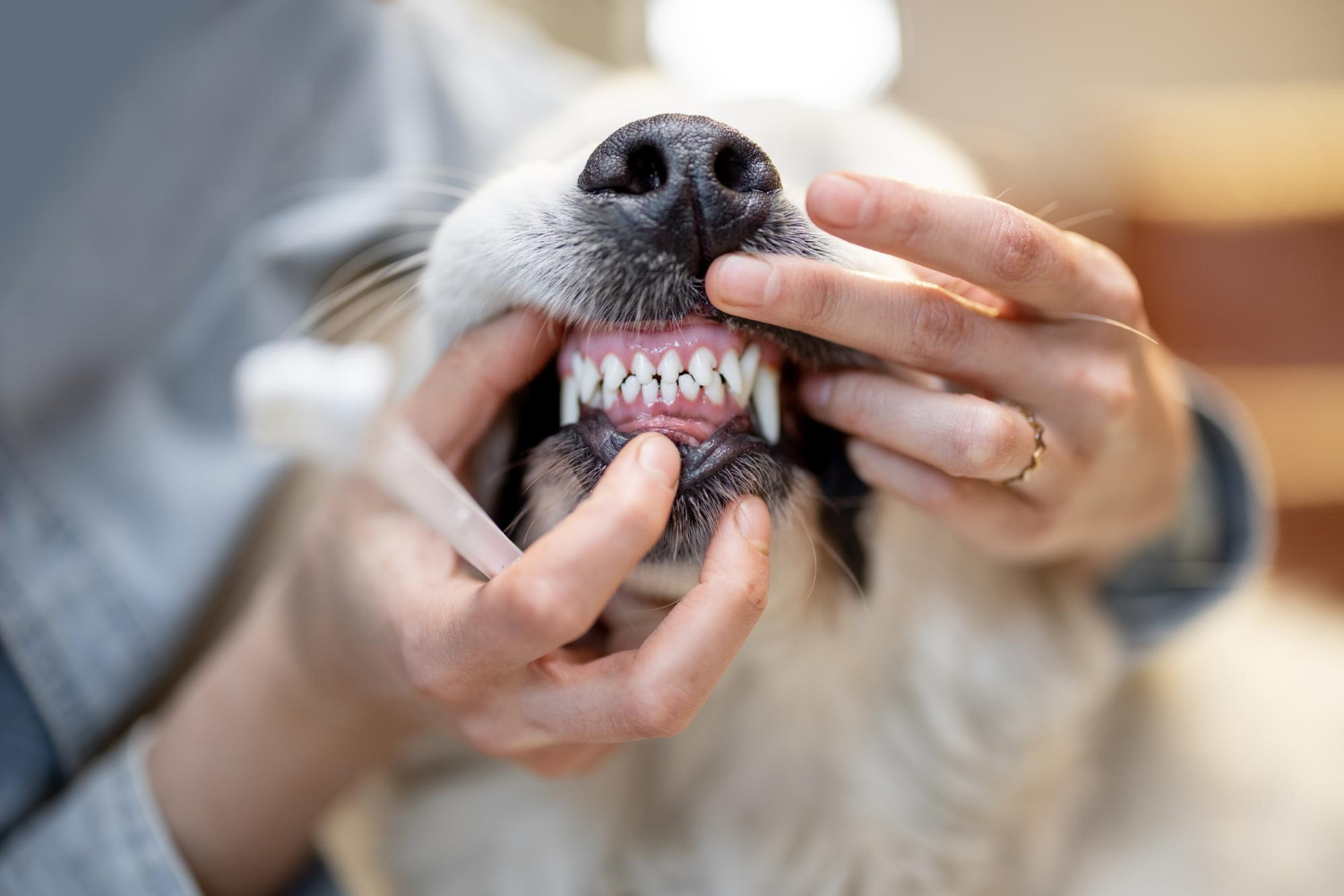
Gently pull the upper lip upwards to expose the teeth.
Using a back-and-forth motion, press the toothbrush against the outward surfaces of the upper teeth and gum line.
Move to the outward surfaces of the lower teeth and brush using the same motion. Don't forget the incisors and canines. The bristles should extend slightly below the gum line.
(Photos courtesy of Dr. Jan Bellows.)
Step 1: Choose the right toothbrush
Step one is to pick an appropriate pet toothbrush.
Save yourself time by not buying a child's toothbrush, which is usually too hard for dogs.
The ideal dog toothbrush will have:
- A long handle
- An angled head to better fit the mouth
- Extra-soft bristles
For dogs weighing less than 30 pounds, a finger toothbrush that fits over the tip of your finger works well.
Step 2: Select an appropriate toothpaste
The best pet toothpastes contain enzymes that help control plaque.
Try to avoid toothpastes with baking soda, detergents, or salt, which are sometimes found in human toothpastes.
Fluoride may be incorporated to help control bacteria.
Place the toothpaste between the bristles, as this allows the paste to spend the most time next to the teeth and gums.
Step 3: Help your dog become comfortable with brushing
Most dogs accept brushing if they are approached in a gentle manner.
If you can start when they are young, it's quite easy, but even older pets can learn to accept the process.
Start slowly. You can use:
- A damp washcloth, or
- A piece of gauze
Use these to wipe the teeth, front and back, in the same manner you will eventually use the toothbrush.
Praise your dog during the process and offer teeth-healthy treats, such as dental chews, as a reward.
Do this twice daily for two weeks, or until your dog becomes familiar with the approach.
Then:
- Take the pet toothbrush.
- Soak it in warm water.
- Begin brushing daily for several days.
- Once your dog accepts brushing, add the pet toothpaste.
Proper brushing technique
Most attention should be given to the outside surfaces of the upper teeth.
The toothbrush bristles should be placed at the gum margin, where the teeth and gums meet, at a 45-degree angle.
The brushing movement should follow an oval pattern.
Be sure to gently place the bristle ends:
- Around the base of each tooth, and
- Into the spaces between the teeth
Complete ten short back-and-forth motions, then move the brush to a new location.
Cover three to four teeth at a time.
Daily dental care matters
Dog home dental care should include:
- Daily brushing
- An enzymatic pet toothpaste
- A proper toothbrush designed for dogs
Taking an active role in your dog's dental care can help reduce dental disease, minimize bad breath, and potentially decrease the risk of serious complications affecting the heart and kidneys.
Everyone wins.
Dr. Jan Bellows is a board-certified veterinary dentist. His office, Hometown Animal Hospital and Dental Clinic, is located at 17100 Royal Palm Boulevard in Weston, Florida. He can be reached for consultations at 954-349-5800.